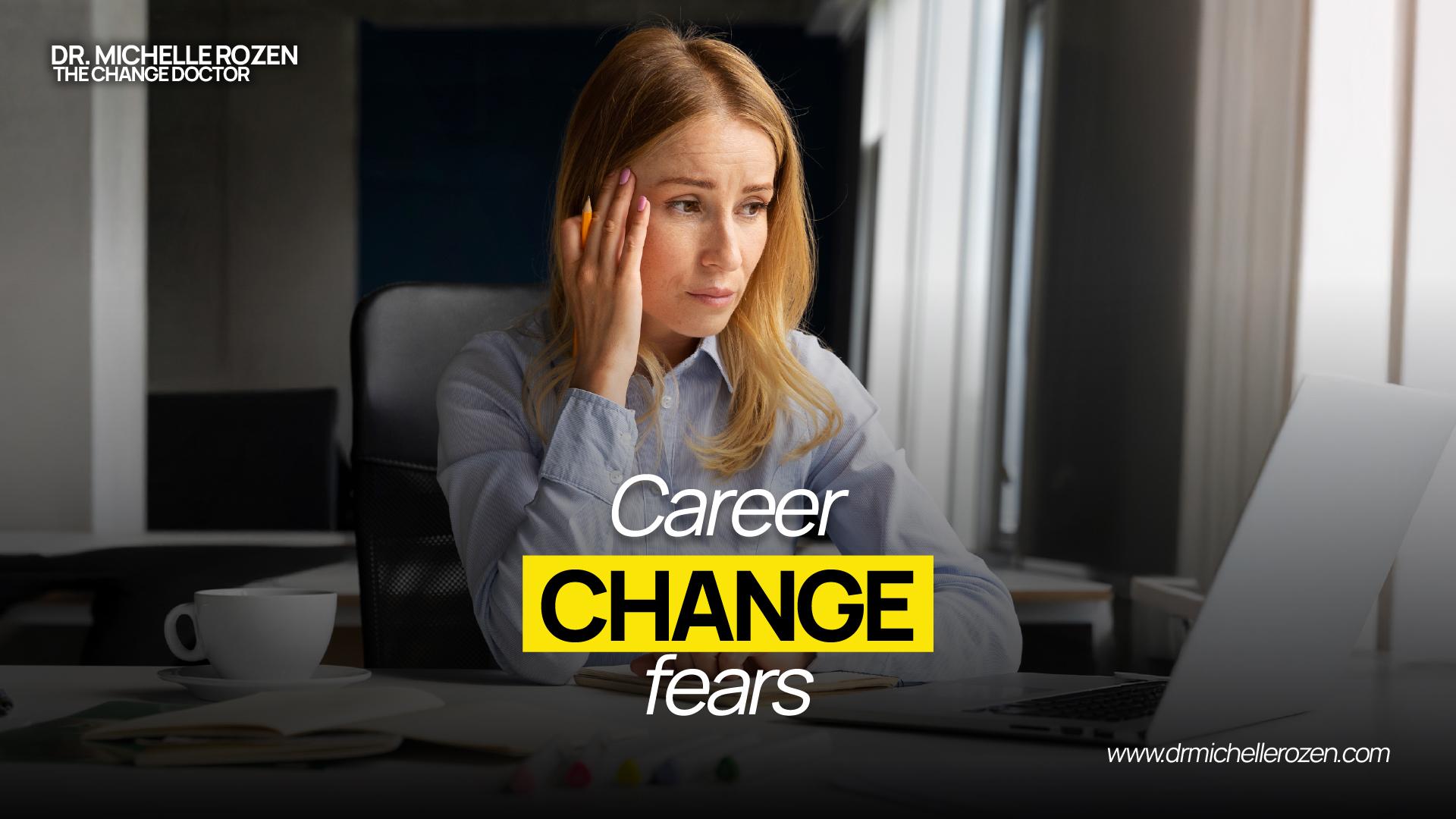
You overcome career change fears by understanding how fear works in the brain, reframing the risks you’re afraid of, and taking action that builds clarity and confidence—one step at a time. That’s the short answer. The long answer is layered, deeply human, and rooted in both neuroscience and the emotional realities of high-achieving professionals. It’s not just about switching jobs—it’s about reimagining who you are and what’s possible next.
Why Career Change Fears Are So Common
Career fear is not a flaw—it’s a signal. It’s the friction between the comfort of what you know and the stretch of who you want to become. Most people think that fear is a stop sign. But in truth, it’s just a crossroads. The leaders who create meaningful change in their careers are not those who feel no fear, but those who learn to interpret it differently.
The Paradox of Potential: Wanting Change But Fearing It
The very desire to grow—to lead differently, to contribute more deeply, to live in better alignment—creates tension. This is the paradox of potential. You can simultaneously crave transformation and resist it with every fiber of your being. Why? Because the same brain that drives you toward excellence also defaults to safety. It’s wired to protect, not to evolve.
Fear of Wasting Time, Money, or Identity
We anchor ourselves to our past investments. Degrees. Titles. Years in one role or industry. We tell ourselves that changing direction would mean those investments were a waste. But here’s the truth: sunk cost is a dangerous illusion. What you’re afraid to lose may be already gone—the relevance, the passion, the alignment. You are not your resume. You are your capacity to grow.
The Neuroscience Behind Career Change Anxiety
If you’ve ever wondered why thinking about leaving your job feels like stepping off a cliff—even when it logically makes sense—neuroscience has the answer. Your brain is not built for the unknown. It’s built for pattern, safety, and survival.
How the Brain Responds to Uncertainty and Risk
Uncertainty triggers a survival response. Even contemplating change can increase cortisol levels and activate the brain’s fear center. From an evolutionary standpoint, your brain still treats ambiguity as danger. The unfamiliar job, the untested idea, the career pivot—they all read as potential threats. Not because they are, but because they’re unfamiliar.
Amygdala Hijack and Overthinking in Career Transitions
When the amygdala hijacks your thinking, logic takes a backseat. You loop. You overanalyze. You imagine worst-case scenarios. This is the moment when otherwise strategic professionals become stuck—not for lack of ability, but because the threat response has taken over. Understanding this is empowering. It means you can interrupt the loop, not live inside it.
High Achievement Culture and the Fear of Making the Wrong Move
The higher you climb, the more you fear the fall. And in a culture that celebrates ambition, talent, and limitless opportunity, that fear can become paralyzing.
You Were Told You Can Do Anything—So Why Are You Frozen?
Unlimited potential sounds inspiring until it becomes pressure. The pressure to choose perfectly. To not waste your “one shot.” To avoid disappointing anyone—including yourself. But here’s the reframe: success isn’t about one perfect leap. It’s about a series of intentional steps, corrections, and recalibrations. The illusion that there’s one “right” move is what keeps people stuck the longest.
How Pressure Leads to Paralysis, Not Progress
When the stakes feel impossibly high, your brain does what it believes is safest: it does nothing. It tells you to wait, research more, or over-plan. But clarity does not come from standing still. It comes from movement, from learning through doing, and from discovering new data points by taking the next best step—even without the full map.
Real-Life Story: Claire and the Fear of Starting Over
Claire was a brilliant marketing executive with a strong track record, a respected brand, and increasing dissatisfaction. What used to energize her now drained her. She dreamed of becoming a coach, but the thought of leaving the certainty of her role terrified her. What if she failed? What if she lost credibility?
One Question That Shifted Her Perspective
The question that broke her paralysis wasn’t complex. It was simple, but strategic: “If I already had five years of experience in this new field, what decision would I make today?” That single shift allowed her to think from a future-self perspective, one not limited by current fears. The answer? She’d go. And she did.
Why She Needed Momentum, Not a Master Plan
Claire didn’t launch a business overnight. She started small. She coached part-time. She experimented. And in doing so, she learned that clarity doesn’t precede action—it follows it. Her momentum created feedback. That feedback built confidence. And that confidence helped her commit more fully, without ever having a “perfect” plan.
The Hidden Cost of Staying Stuck
Every time we delay change out of fear, we quietly accumulate losses—of time, of meaning, of momentum. And those losses are often harder to recognize than the dramatic risks we’re afraid to take.
Why Inaction Is the Greater Risk
The idea that staying in place is the safer bet is one of the most dangerous beliefs in professional life. Because over time, what feels safe becomes suffocating. What feels known becomes irrelevant. The real risk isn’t in trying something new—it’s in becoming someone you no longer recognize because you stayed too long in the wrong story.
What You’re Really Giving Up by Avoiding Change
Avoiding change doesn’t preserve stability—it erodes potential. The longer you stay in misalignment, the more you normalize burnout, numbness, and detachment. You don’t just give up a new title—you give up the version of you who could’ve grown through it.
How to Break the Loop of Career Change Fears
You can’t eliminate fear. But you can disarm it. The key is not to wait for confidence. It’s to create momentum in its absence.
Acknowledge the Fear—but Don’t Let It Decide
Fear is data. But it should never be the decision-maker. Name your fear. Write it down. Ask yourself: is this a fear of loss—or a fear of growth? Most often, it’s both. That doesn’t mean you wait. It means you lead yourself through it.
Take One Small Action That Moves You Forward
Send one email. Make one call. Start one exploratory project. Small action does something powerful: it breaks the brain’s panic loop. And with every action you take, you build evidence that you can survive change—and thrive through it.
One Year Later: Claire’s Journey Beyond Fear
Twelve months after her decision to take the first step, Claire had transitioned fully. She was coaching full-time. Her revenue grew. But more importantly, so did her alignment. She didn’t just change careers. She reconnected with herself.
From Hesitant to Fulfilled—Without a Perfect Plan
Her story wasn’t linear. But it was intentional. The most powerful shift wasn’t tactical—it was internal. Claire stopped waiting to become fearless. She became action-oriented despite the fear. And that made all the difference.
Final Thoughts: Turn Career Change Fear Into Fuel
The fear of change is universal—but it doesn’t have to be defining. In fact, it can be the very signal that points to your next breakthrough. Fear is not the enemy. It’s energy. And energy, when redirected, becomes fuel for transformation.
If the Fear of Regret Is Bigger Than the Fear of Risk—Go
The most strategic professionals don’t ask, “What if I fail?” They ask, “What will I regret not trying?” If the answer to that is clear, so is your next move. Choose growth. Choose alignment. Choose to bet on yourself.
Action Builds Confidence. W0aiting Doesn’t.
Confidence is not built in your head. It’s built in motion. Every small step forward becomes proof that you’re capable. And proof beats perfection, every single time. Don’t wait to feel ready. Decide. Move. Trust yourself in the doing. That’s where your next chapter begins.